
Losing a Dog to Mast Cell Cancer: Our Story of Love, Loyalty, and Goodbye
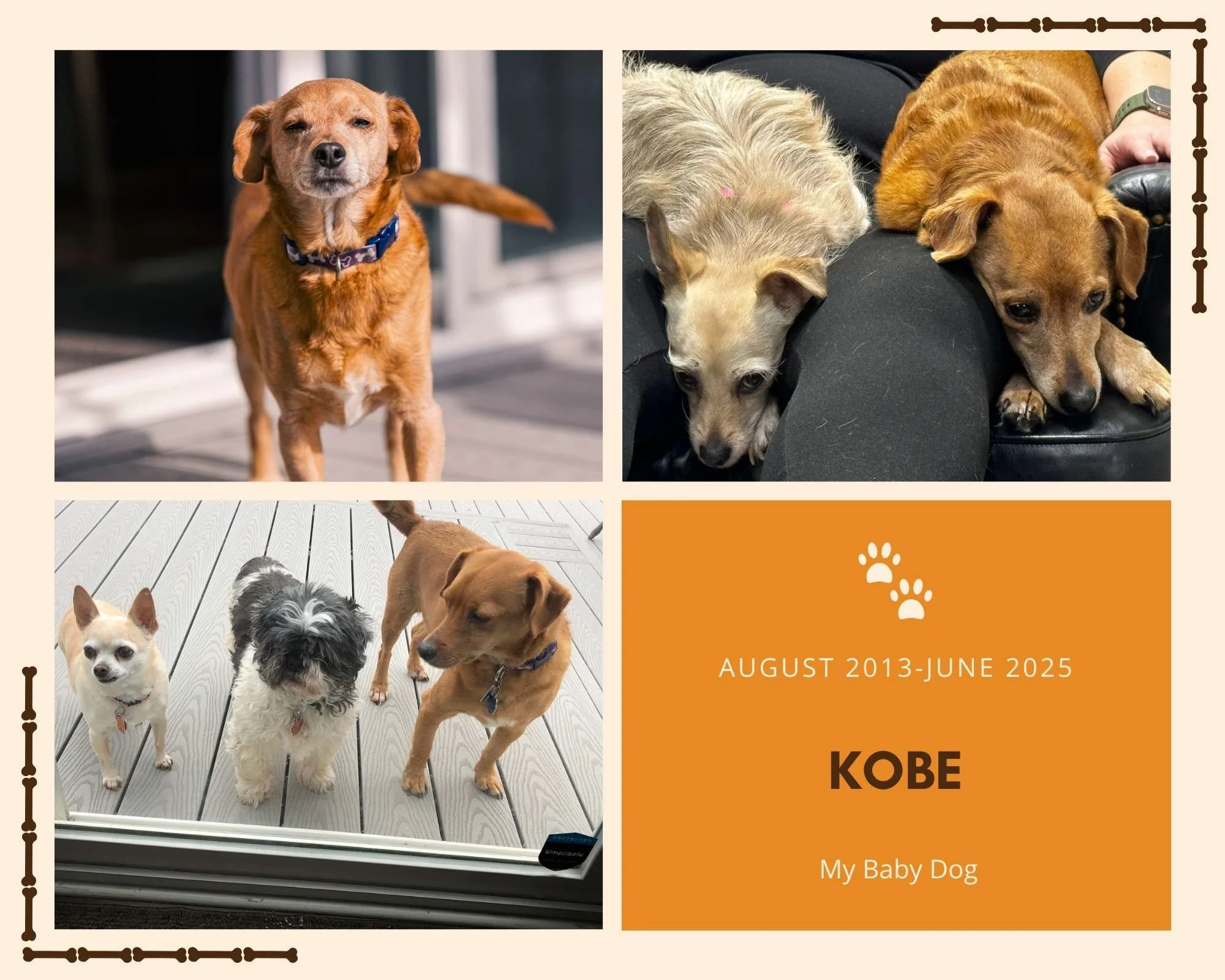
Starting top left clockwise: Photo 1:Kobe; Photo 2: Izzy (our remaining dog) and Kobe on my lap; Photo 3: Kobe’s life span and one of many nicknames; Photo 4: my 3 dogs that have since passed, Roxy, Bailey and Kobe.
Kobe: My Handsome Boy Dog
In early fall of 2013, I volunteered at a pet adoption event for a local shelter back when we lived in Illinois. At the time, we already had two dogs (Roxy, a Chihuahua, and Bailey, a Shih Tzu) both around seven years old. So honestly, the chances of me bringing home another pet were slim.
I actually made it through the event without adding a third dog to the family. However, I spent the entire day texting my husband pictures of adoptable dogs. Naturally, the next day, he took me to the local animal shelter. That’s where we met this adorable “beagle-dachshund mix.” (We later did a DNA test—no beagle, and barely any dachshund. Classic shelter mystery mix.)
He was a rescue puppy, found abandoned in Nebraska alongside his sister. We never met her; she had Parvo. I hope she made it. Our other dogs were Roxy and Bailey, so—of course—I insisted on another name that ended with the “-ee” sound. And that’s how Kobe got his name.
When he was little, my husband used to call him “Kobe Beef,” which became a running joke at the vet’s office. His chart even read Kobe Beef a few times. Eventually, the staff caught on: if I was bringing him in, they’d remove “Beef” from the whiteboard. If it was my husband, they’d put it back. I like to think we kept the staff entertained.
Vet visits with Kobe were frequent. He broke his leg as a puppy. A few years in, he swallowed a sock. And in his final year, he battled cancer.
Originally, Kobe was supposed to be the family dog. Roxy and Bailey were clearly mine, so the idea was that Kobe would be the kids’ pet. That plan completely backfired. He bonded with me more than any of the others—glued to my side, fiercely protective, and endlessly loyal for his 27-pound frame. If someone hugged me, he’d growl or bark. When I started working from home, our bond only grew stronger. I called him and our other dog, Izzy, my coworkers.
This year has been especially hard for our pet family. We’ve lost three animals. My son’s guinea pig passed in January. Her mother passed in May. But the loss that shattered my heart happened just yesterday, July 26. Kobe, my handsome boy dog, my shadow, was nearly 12.
I feel robbed. Roxy lived to nearly 16. Bailey made it almost 17. Kobe was a small dog. I assumed we’d have more time. But age and size aren’t guarantees and I know that.
We first found a small lump near Kobe’s rib cage in late 2024. I wasn’t too worried—older dogs get lumps. The vet did a biopsy, followed my surgery to remove it. A few days later, the call came: aggressive mast cell cancer. I was in shock. Our options weren’t easy. We could do an X-ray and ultrasound to see if it had spread, but it wouldn’t change much. We could try chemotherapy—weekly visits to Cleveland, bloodwork, side effects, $500/week, with maybe a year of life added.
Instead, we chose comfort care. The vet prescribed Benadryl (morning and night) and Pepcid (once daily) to reduce histamine effects, mast cell tumors are a cancer of the allergy cells, and those meds help manage reactions. He told us Kobe would be on them for the rest of his life.
In early May, Kobe started declining. More lumps appeared, some under his skin, others visible. We returned to the vet and agreed to try prednisone. He perked up almost immediately, eating well, wagging his tail, chasing birds, checking his favorite rabbit hiding spots. He seemed like himself again for a few weeks.
But once the steroids wore off, the itching returned. We moved to a daily dose. It worked for a while, but the bumps became bigger, itchier. He ended up in a cone. We tried dose adjustments, but by late June, I could feel things shifting. His eyes looked tired.
By Sunday, June 22, everything changed. He started whining at night, struggling to get comfortable. I gave him gabapentin to help him rest. But each night got worse. By Tuesday, I knew it was time. Cancer is one thing. Watching him in pain and discomfort was another.
He’d developed persistent diarrhea, a late-stage symptom of mast cell cancer. I couldn’t let him suffer. We chose in-home euthanasia. I didn’t want his last memory to be a stressful car ride and a cold exam room.
That day was brutal. I quietly marked every moment: last breakfast, last time I carried him, last trip outside. The vet arrived at 3:30 p.m. I’m grateful he passed peacefully, surrounded by love, at home. Our other dog, Izzy, got to see him before and after, just like we’ve done with each dog that’s passed. Somehow, they always understand.
He’ll be cremated, and I should have his ashes in about ten days.
My heart still hurts. He was my loving, loyal companion. My in home coworker. My baby dog. My shadow. Pets aren’t just pets, they’re family. And letting them go is one of the hardest, most loving things we can do.
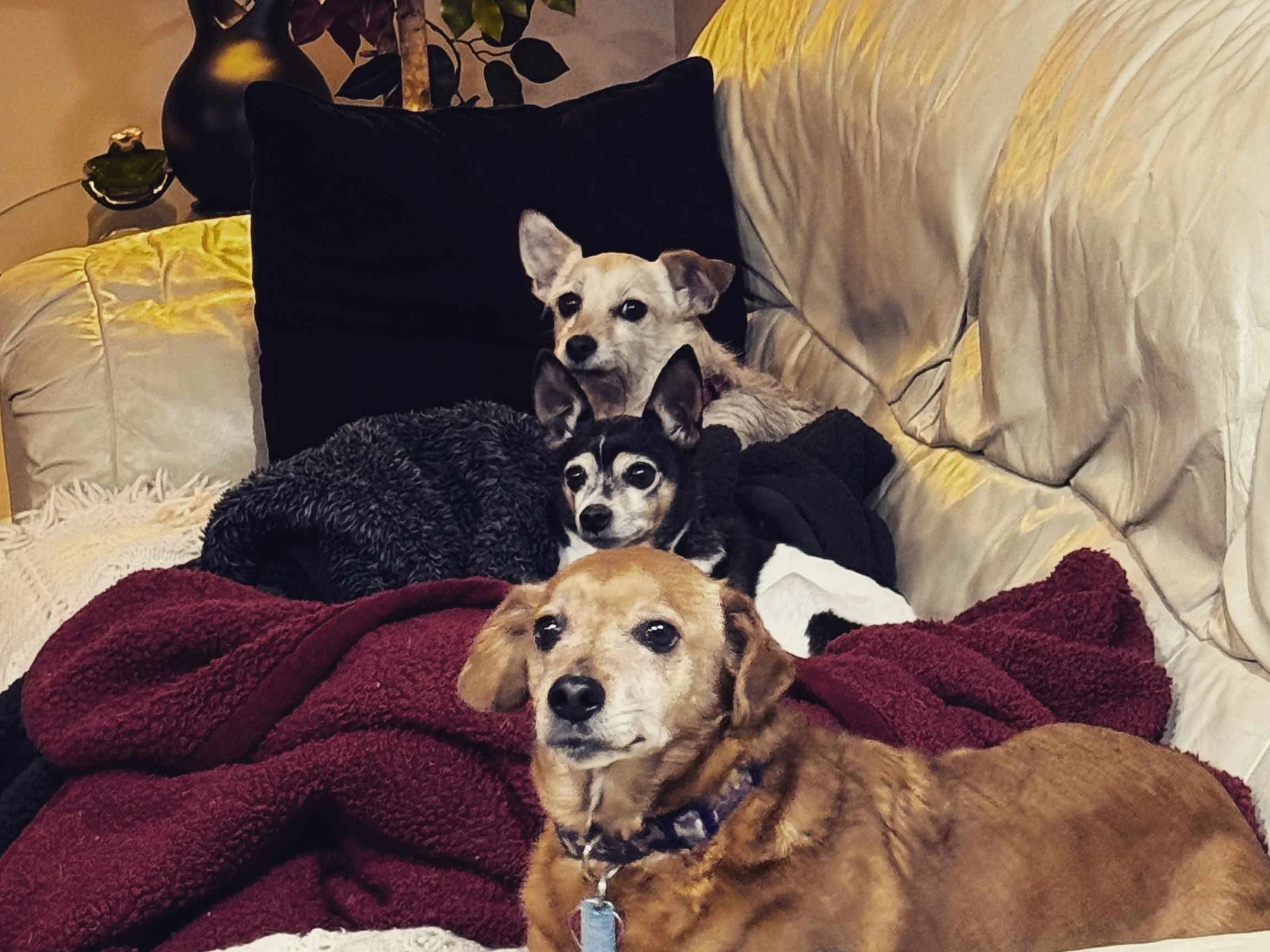
Izzy, Lucky (my parents dog), and Kobe on the couch together. April 2025.
Disclaimer:
This is a personal story about our dog Kobe and our experience with his mast cell cancer diagnosis and care. I’m not a veterinarian, and this post is not intended to provide medical advice or treatment recommendations. Every pet, diagnosis, and family situation is different. Please talk to your veterinarian to determine the best path for your pet’s health and comfort.
